What is photo compositing?
Photo compositing is the process of building one image from two or more visual sources. A retoucher may place a photographed subject into a new environment, combine several exposures, reconstruct part of a set, add practical elements or create an entire scene from separate assets. The purpose is not simply to assemble layers. Every element has to share one convincing visual logic.
Professional photo compositing is used in advertising, fashion, editorial, product, portrait and entertainment imagery. It can solve practical production limits—such as a location that cannot be photographed with the subject—or extend an art direction beyond what was captured in camera. The finished composite may look completely realistic or intentionally surreal, but it should always feel deliberate.
Compositing is often part of a broader retouching workflow. Skin, hair, garments and products may still need refinement after the scene is assembled. Colour grading, local contrast and final sharpening then bring the individual components into one coherent image.
- Background replacement and set extension
- Subject extraction and placement
- Multiple-exposure blending
- Object removal or addition
- Atmospheric and practical effects
- Unified colour and final output
Photo compositing versus standard photo retouching
Standard photo retouching improves what is already present in the frame. It may clean skin, refine hair, correct colour, shape light or remove temporary distractions while preserving the photographed scene. Compositing changes the construction of the image by introducing, replacing or combining larger visual elements.
The boundary is not absolute. Removing a small object may be routine cleanup, while rebuilding a missing garment edge or replacing a complete background becomes compositing. A single campaign image can require both: the subject is refined naturally, then integrated into a new set and graded as one final piece.
The distinction matters when briefing and pricing a project. Composite work depends on the quality and compatibility of every source asset, not only the hero photograph. The retoucher also needs time for masking, perspective matching, shadow construction, edge integration and repeated checks at final output size.
Start with a believable subject extraction
A convincing composite begins at the edge of the subject. Hair, translucent fabric, fur, reflections and shallow depth of field cannot all be treated with one hard selection. The mask needs to preserve fine transitions while removing colour contamination from the original background.
Placement is equally important. The subject must sit at the correct scale and horizon level for the new environment. Contact shadows anchor feet, furniture or products to a surface; softer ambient shadows describe the surrounding light. Without these cues, even a technically clean cut-out can appear to float.
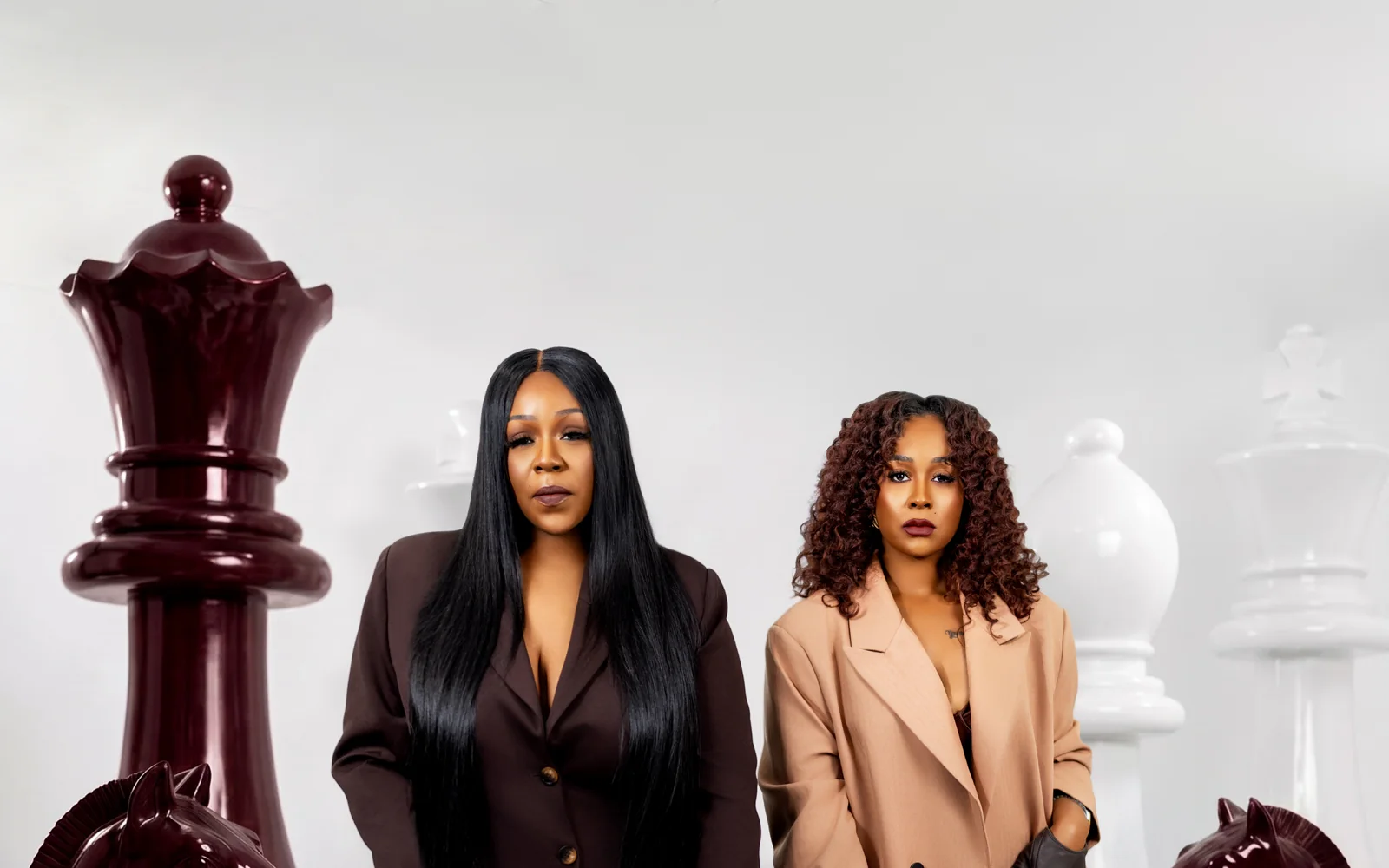
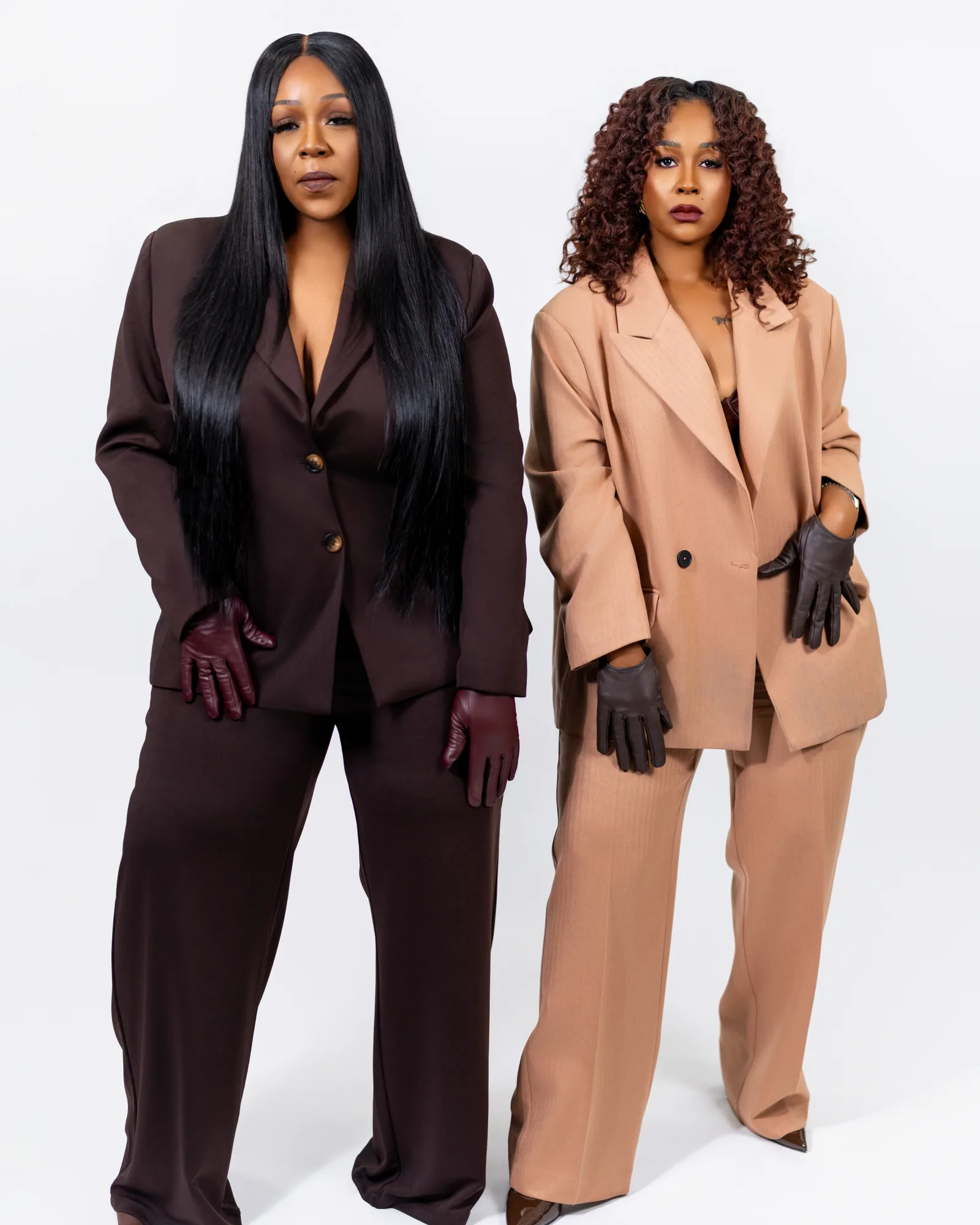
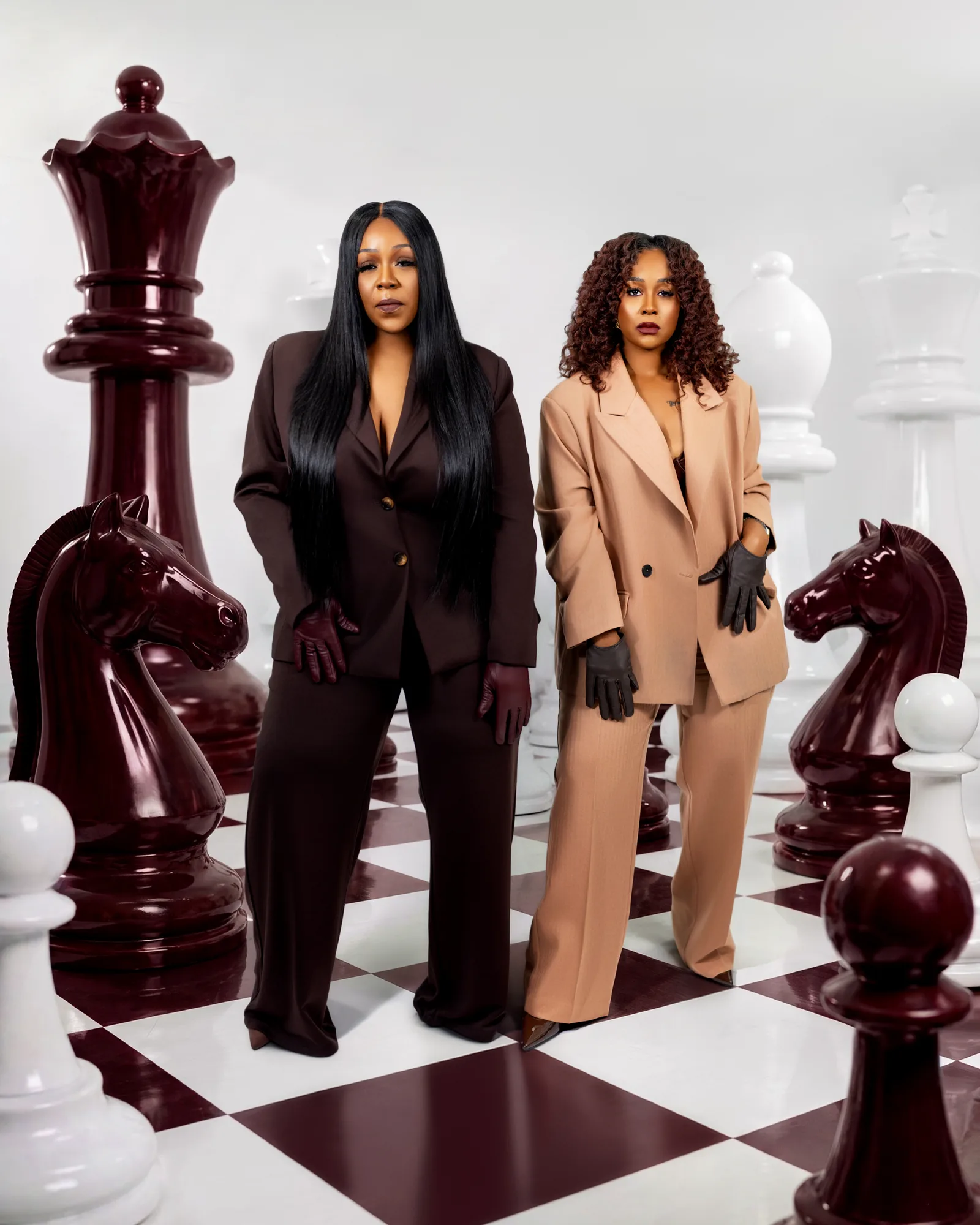
In the fashion example below, the original studio portrait becomes part of a chess-inspired campaign scene. Scale, floor perspective, overlapping pieces and controlled shadows create depth around the two subjects while the wardrobe palette is carried into the environment.
Match perspective, light and depth
Perspective decides whether separately photographed elements can occupy the same space. Camera height, focal length and vanishing points should be compared before detailed masking begins. A background can be beautiful and still be unsuitable if its viewpoint forces the subject into an impossible scale or angle.
Light direction must also remain understandable. Highlights and shadows do not have to be identical across every source, but they need to support one final lighting design. Local dodge and burn, luminosity adjustments and carefully built shadows can connect the pieces without flattening their natural form.
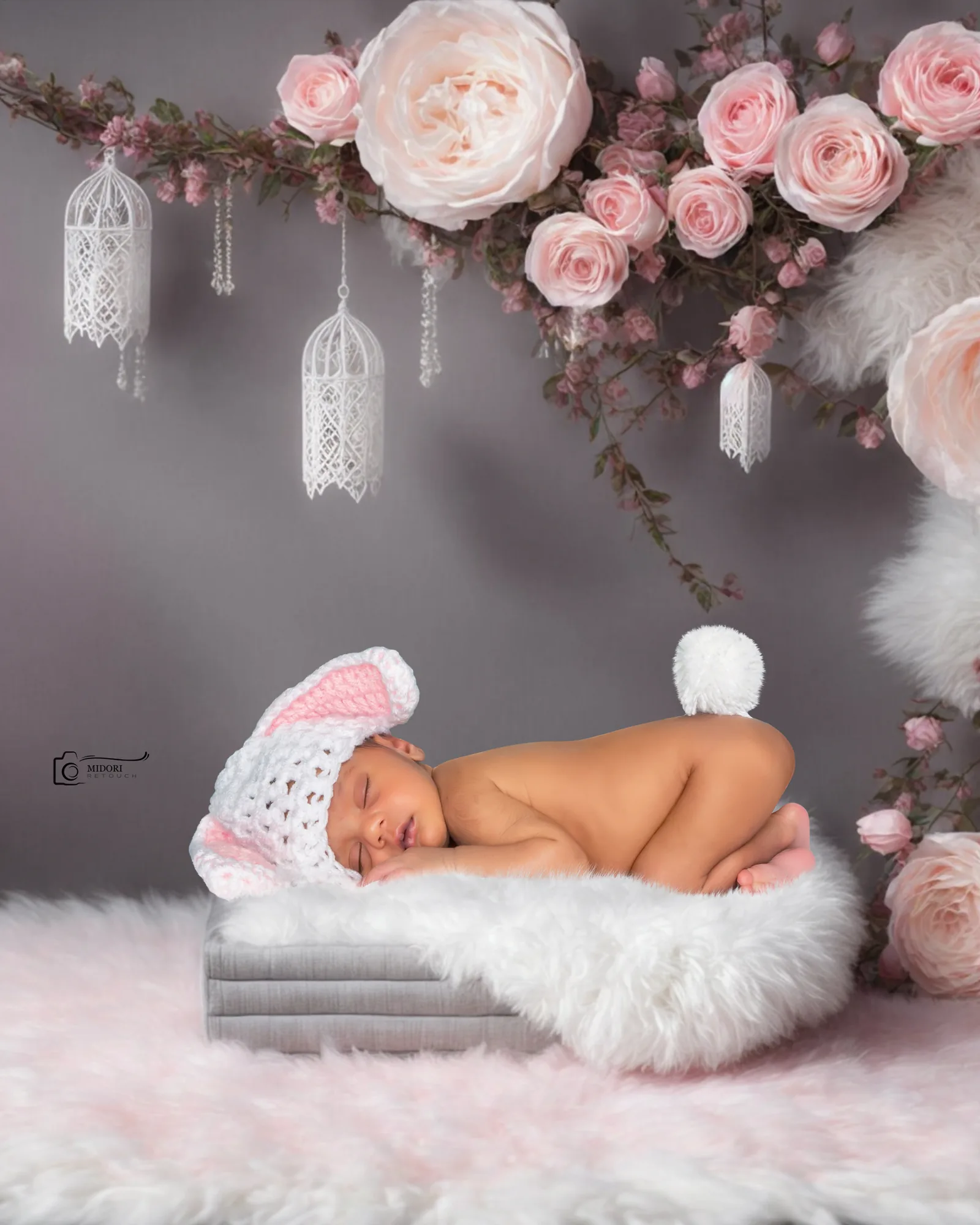
Depth is created through more than blur. Contrast, saturation, atmospheric haze, edge sharpness and texture scale usually decrease with distance. In the newborn portrait, the original simple setup is extended into a floral environment. The added props become believable because their scale, softness, colour and foreground overlap support the position of the child.

Use colour and texture to make every layer belong
Source photographs often arrive with different white balance, contrast, noise and sharpness. Correcting each layer in isolation is not enough. The retoucher first establishes the intended final palette, then adjusts relationships between skin, wardrobe, objects, background and effects so the eye reads one scene.
Texture is a frequent giveaway. A clean studio portrait placed into a grainy background can look pasted in, while an overly sharp stock element may pull forward from its intended depth. Grain, micro-contrast, lens softness and final output sharpening should be judged across the whole composite at the size where it will be published.
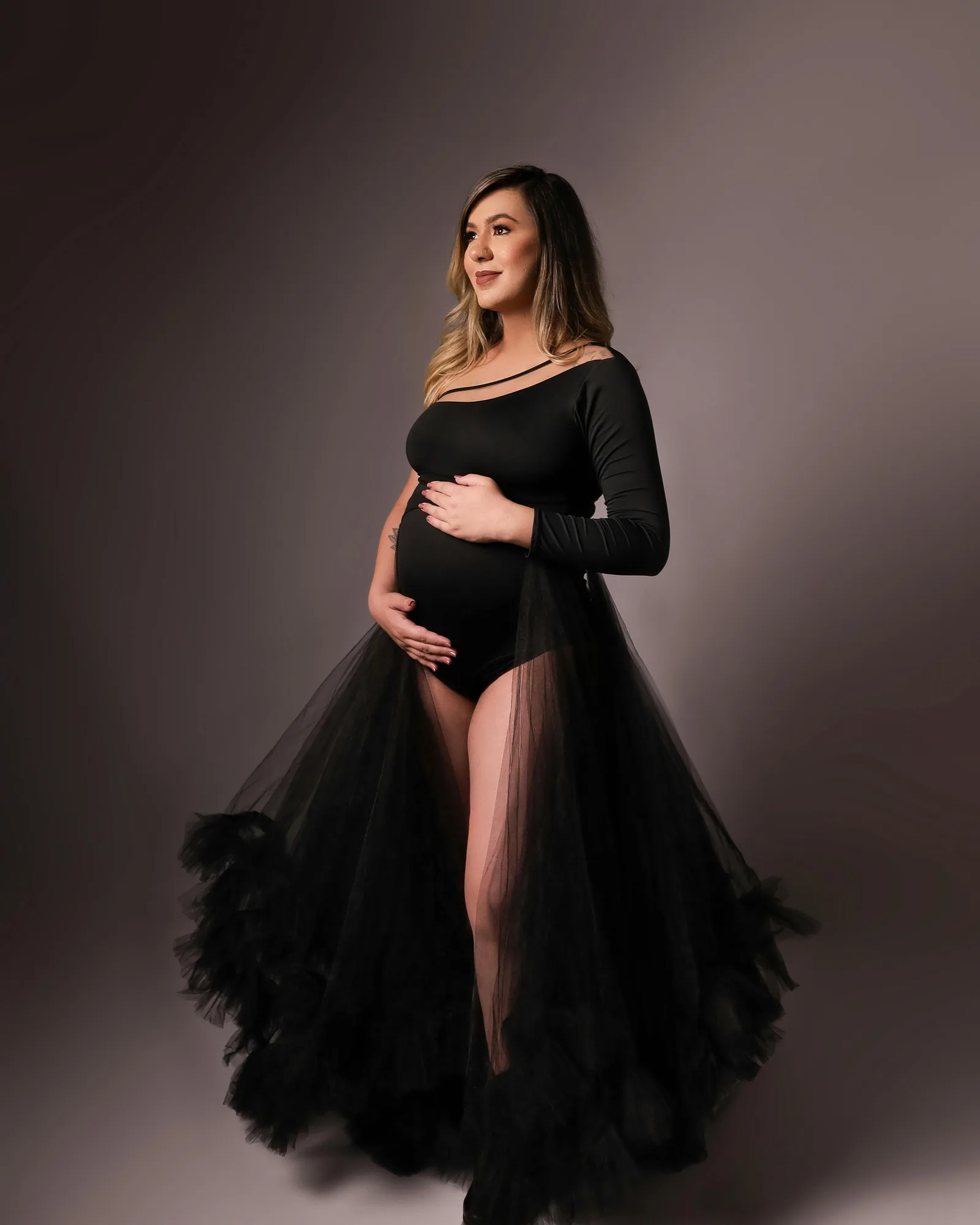
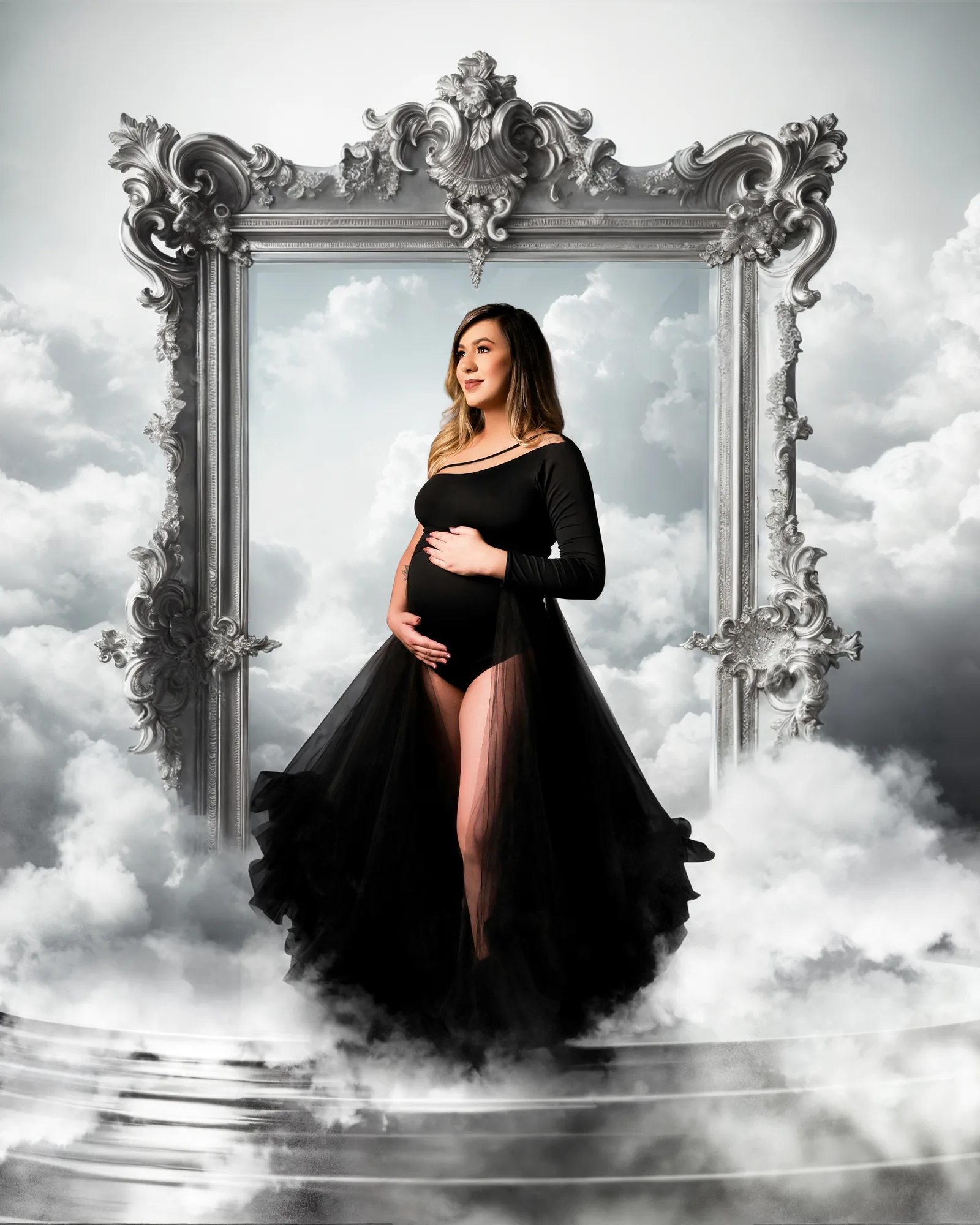
Atmospheric elements can help connect layers when they follow the scene rather than conceal weak edges. The maternity example uses cloud forms in front of and behind the subject, a restrained monochrome palette and repeated reflective surfaces to turn a studio portrait into a cohesive fantasy environment.
How to prepare files for a composite image
The best time to plan a composite is before the shoot. Share a rough layout or mood board so the photographer can match camera height, lighting direction and subject position to the intended background. Capture extra space around the subject when alternate crops or set extensions may be required.
Send high-resolution, high-bit-depth source files whenever possible. Include the chosen hero frame, alternate exposures, clean plates, background options, prop photographs and any approved stock assets with their licence information. Keep original files untouched and place visual notes on separate marked copies.
Define the final use, dimensions and colour profile at the start. A composite for a mobile social placement may need a different crop and detail strategy from a billboard or print campaign. If typography or product packaging will be added later, supply the layout so important details remain clear.
- Rough layout, sketch or mood board
- High-resolution subject and background files
- Camera, lighting and lens information when available
- Clean plates and alternate exposures
- Licensed source assets
- Final crop, dimensions and colour profile
Choosing a professional photo compositing service
Evaluate composite work at both full image scale and close detail. Look for consistent light, credible contact shadows, clean but natural edges and a shared texture across every component. The strongest work does not always call attention to its technical difficulty; it makes the art direction feel inevitable.
Ask how the retoucher handles source evaluation, licensing, colour management, layered files and revisions. Complex images benefit from staged approvals: first composition and scale, then detailed integration, colour and final finish. This prevents late structural changes after hours have been invested in edge work and local polish.
Midori Studio provides remote photo compositing and high-end retouching for photographers, agencies and brands worldwide. Every project is reviewed against its source assets, intended output and creative direction. A representative test may be available for suitable professional enquiries, with a tailored schedule and quote confirmed before production begins.