What a professional photo retouching rate includes
A retouching quote pays for more than the visible corrections made in Photoshop. It also covers the judgement required to protect skin texture, product shape, fabric detail and the original lighting while removing distractions. File preparation, colour management, communication, quality control and final delivery are part of the service even when they do not appear as separate line items.
That is why two retouchers can quote different amounts for an image that looks simple at first glance. One estimate may cover only a basic clean-up, while another includes detailed hair work, colour matching, client review, layered working files and several output sizes. A useful comparison begins by checking that both quotes describe the same result and the same deliverables.
Professional photo retouching rates should therefore be read as a production estimate, not as a price attached only to the number of photographs. The strongest quote makes its assumptions clear enough that the client can understand what will be delivered, when it will be ready and what happens if the scope changes.
- Review and preparation of source files
- Creative and technical retouching time
- Colour-managed quality control
- Communication and agreed review rounds
- Final exports, naming and delivery
- Archiving or layered files when included
Midori Studio indicative retouching rates
The prices below are per image in US dollars and provide a practical starting point for budgeting. They are indicative rates rather than fixed quotations because the amount of cleanup, reconstruction and detailed finishing cannot be judged from the image count alone.
Basic retouching begins at US$3 per image. Model retouching begins at US$5 per image, while high-end retouching begins at US$10 per image. Composite retouching is typically US$10–20+ per image, depending on the number and compatibility of the source assets, masking difficulty, background construction and the realism required.
File quality, image complexity, final dimensions, delivery time, project volume and requests outside the agreed brief may affect the final price. Midori Studio reviews representative files and confirms a written quotation before production begins, so the client knows the approved scope and cost.
- Basic retouching — from US$3 per image
- Model retouching — from US$5 per image
- High-end retouching — from US$10 per image
- Composite retouching — typically US$10–20+ per image
Four common ways retouchers price a project
Per-image pricing is easy to budget when a set contains photographs of similar complexity. It works well for a defined selection of beauty portraits, product views or catalogue images. The rate should still state the expected level of finish, the number of review rounds and whether difficult frames can be re-estimated after inspection.
Hourly pricing is useful when the scope is exploratory or difficult to predict. Complex compositing, restoration and art-directed experimentation often fit this model because the final solution develops during the work. Clients should ask for a time estimate or approval point so that the budget remains controlled.
A day rate reserves a retoucher for a fixed production period and can suit agencies managing live campaigns, urgent selects or a mixed task list. Project pricing combines the whole brief into one figure and is often the clearest option when image count, deliverables and deadlines are known. Recurring collections may instead use a tailored volume or retainer arrangement after the workflow has been proven.
No model is automatically cheaper. The right structure is the one that matches the uncertainty of the assignment. A precise, repeated brief is usually easier to price per image; an evolving creative brief may be safer as hourly, daily or project work.
- Per image: best for consistent, countable sets
- Hourly: best for uncertain or exploratory tasks
- Day rate: best for reserved production support
- Project or volume rate: best for defined campaigns and recurring work
How the required finish changes beauty retouching rates
Retouching level is one of the largest variables in a quote. A light correction may balance exposure, remove temporary distractions and prepare a clean export. High-end beauty work can add controlled dodge and burn, careful colour separation, hair refinement, make-up cleanup and close inspection at full resolution. Commercial use may also require compositing, layout-safe crops and multiple output versions.
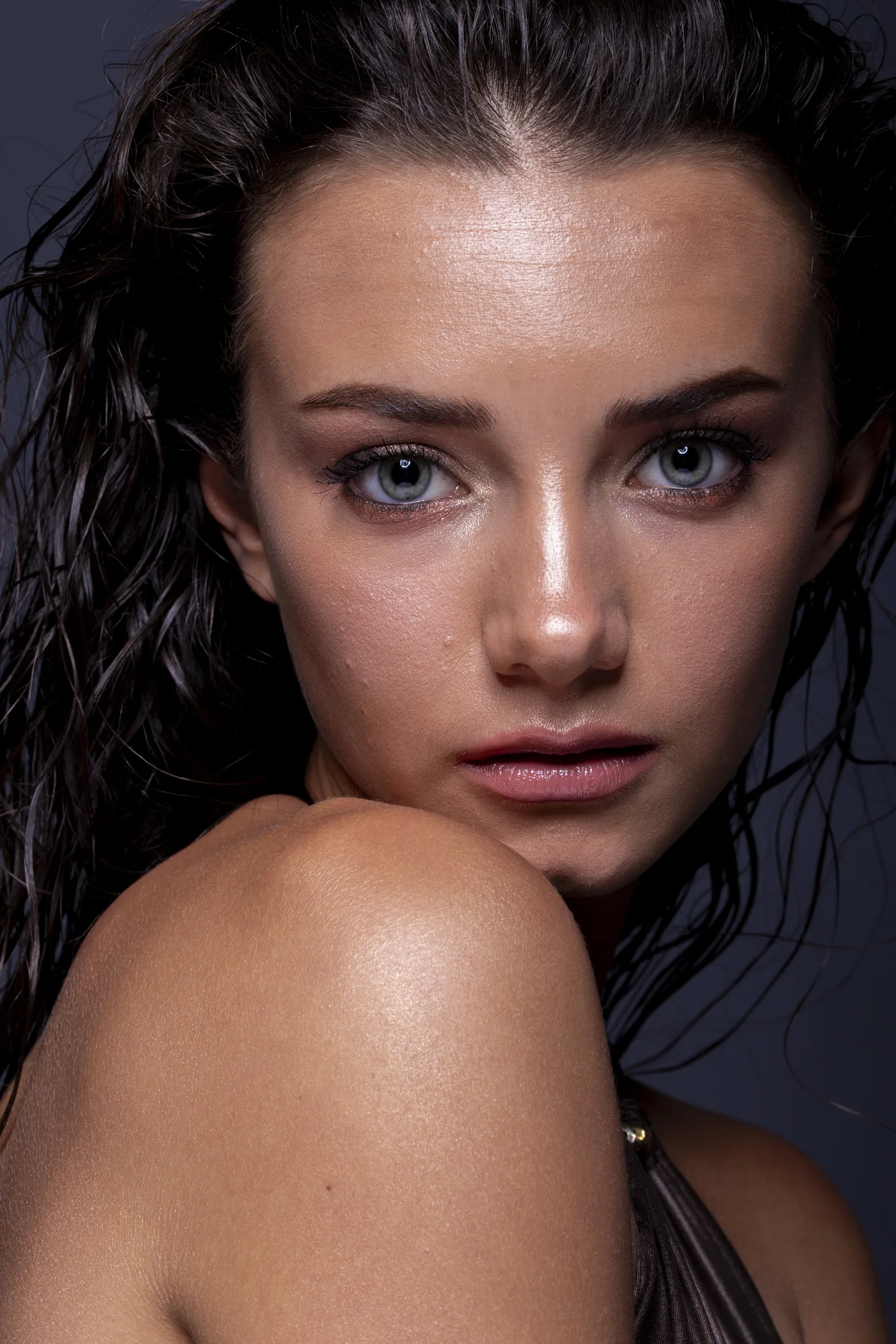
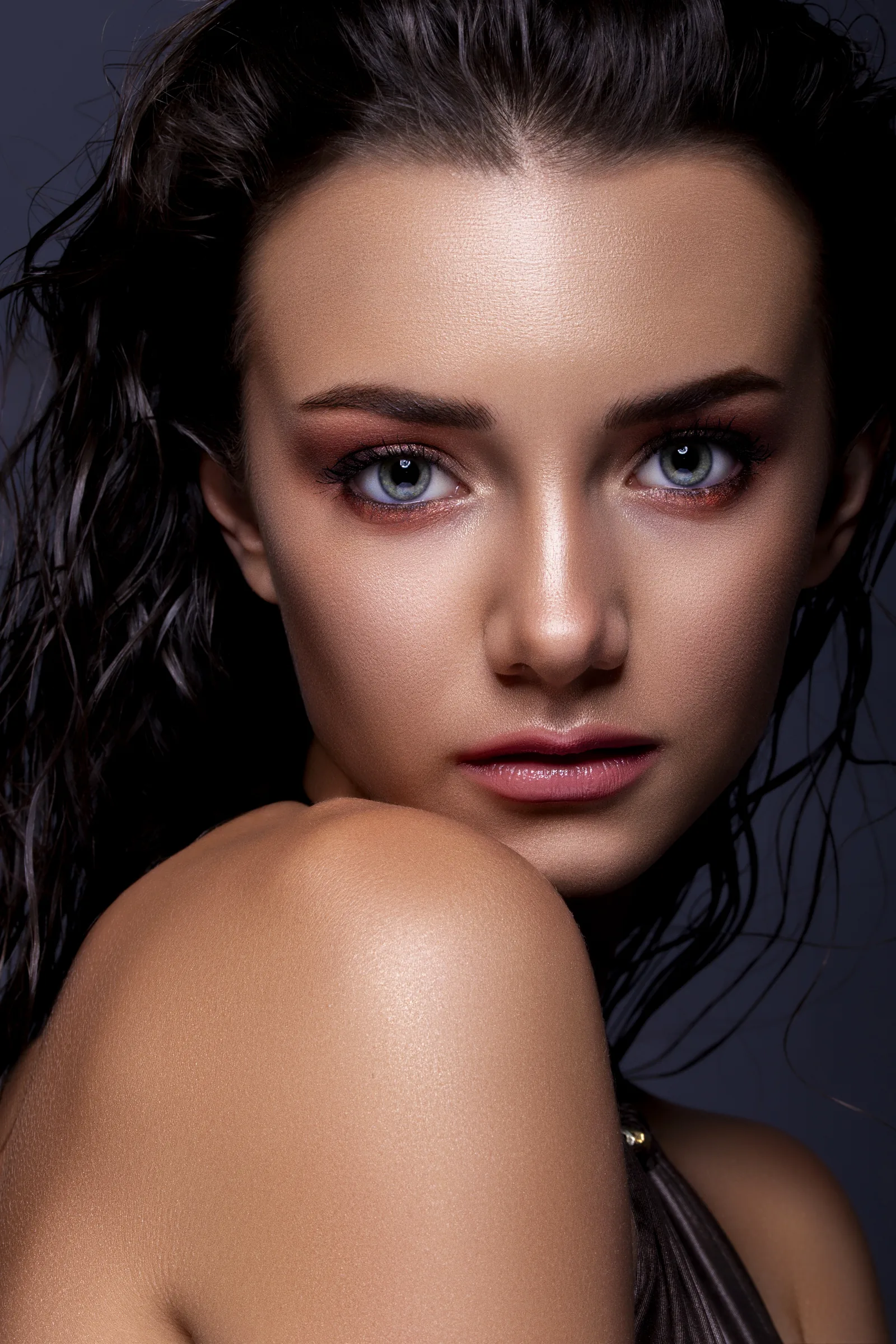
The first before-and-after pair shows a subtle beauty finish. The value is not a dramatic change of identity; it is the cumulative control of skin tone, texture, colour and small distractions. Work like this is judged by how natural the final portrait feels at both close viewing distance and normal output size.
When requesting beauty retouching rates, specify the final crop and resolution. A headshot used at web size and the same photograph prepared for a large cosmetics display can require very different inspection and detail work. References should describe the intended finish rather than asking for an undefined premium look.
Why similar photographs can receive different retoucher rates
Image count alone cannot describe complexity. Skin condition, flyaway hair, wardrobe construction, reflective paint, background consistency and the amount of missing information can all change the working time. A request to keep every pore and brush texture visible also requires a different method from a broad smoothing treatment, even if both images have the same dimensions.
The intended correction matters as much as what is visible in the original. Temporary blemishes can normally be cleaned while permanent features remain. Uneven make-up or body paint may need local colour and texture work. If the brief asks for changes to facial structure, hair shape or lighting, the retoucher must identify where natural correction ends and creative alteration begins.
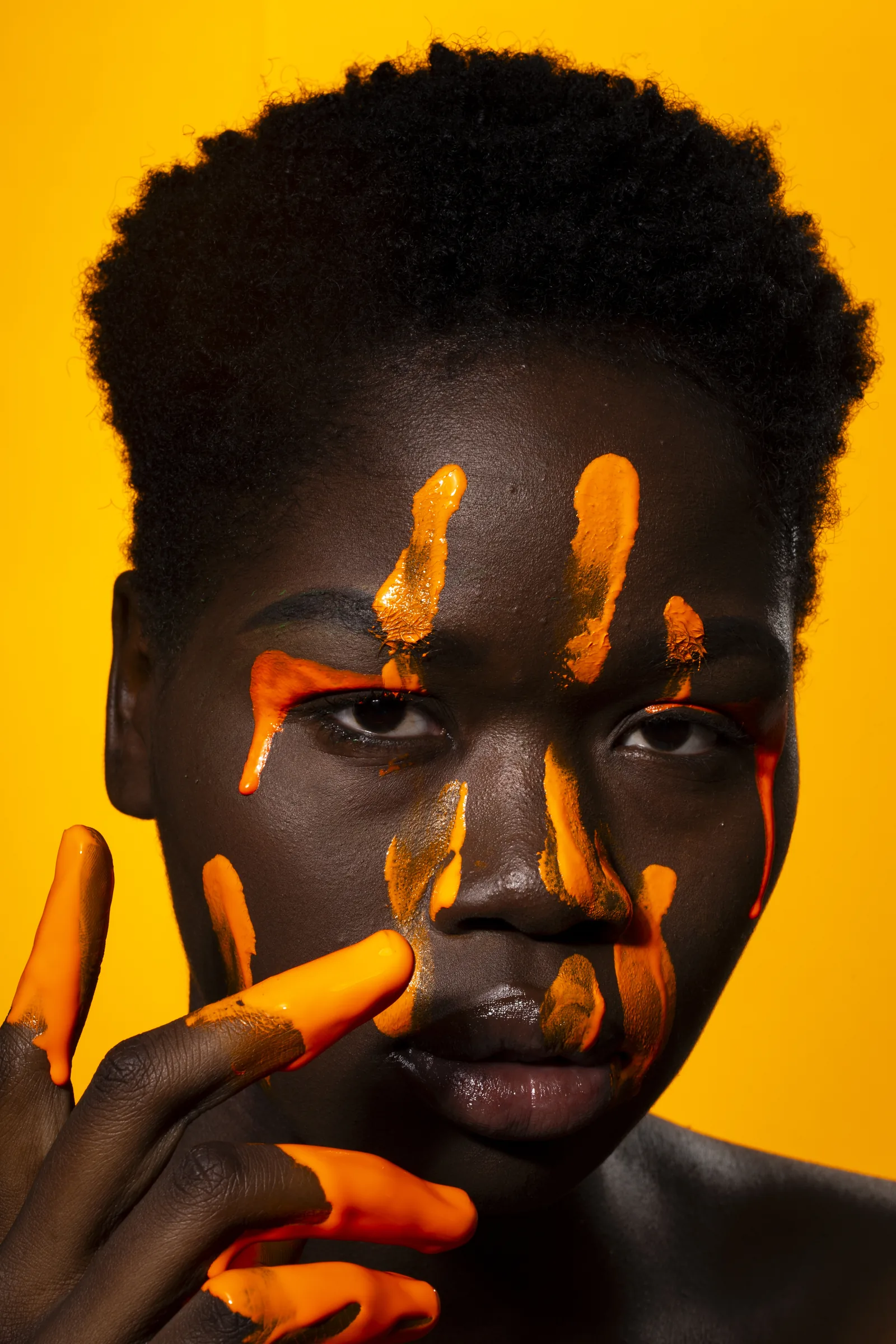
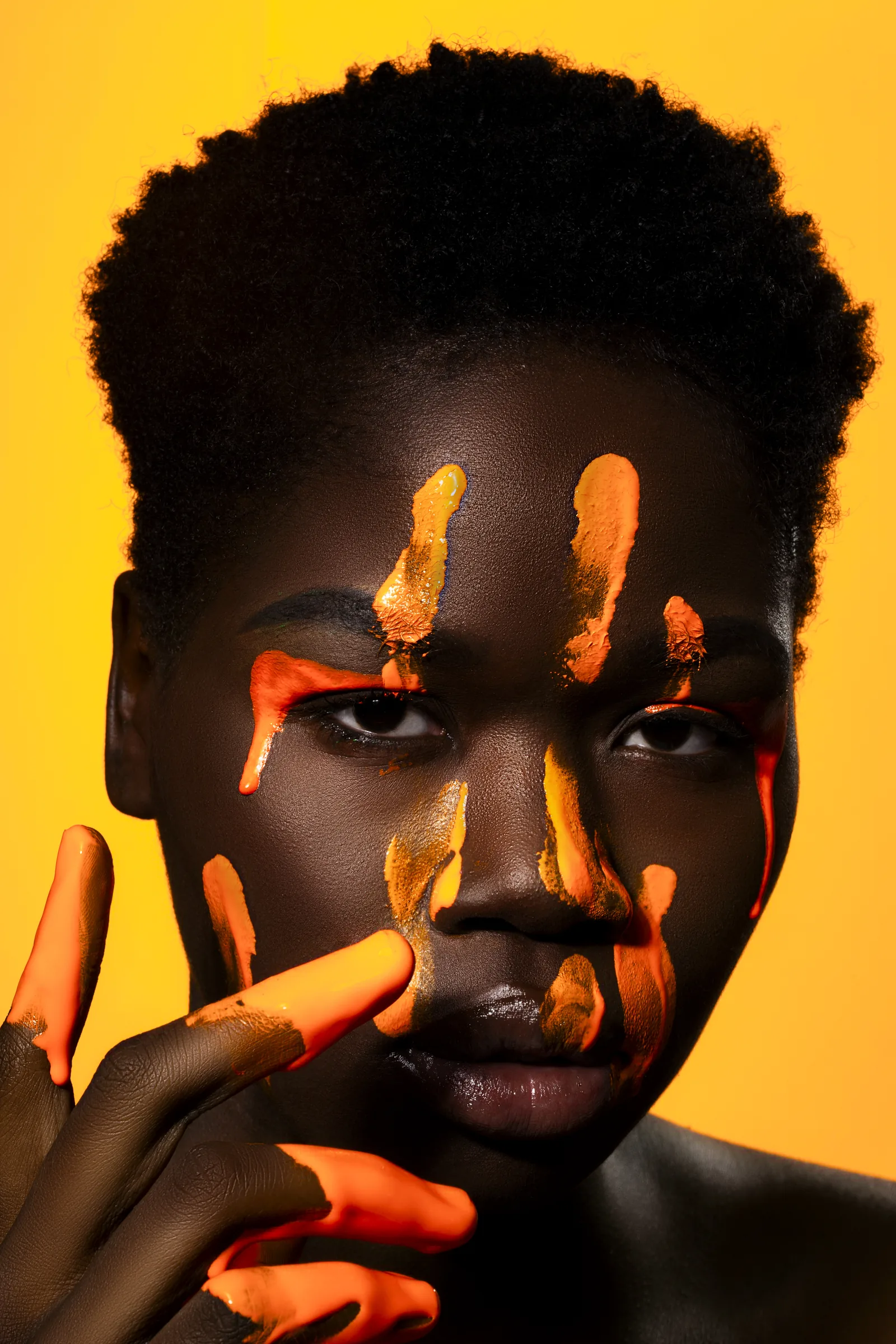
This second comparison demonstrates model retouching in a colour-led editorial portrait. The work refines skin, paint edges, tonal transitions and distracting details without removing the energy of the original capture. Sending the original file and a marked reference lets the retoucher assess that work before confirming the price.
Series consistency, volume and fashion retouching pricing
A larger image count does not always mean that every frame takes the same time. A coherent fashion or editorial series normally begins with one or more master images. Once skin treatment, contrast, garment colour and background direction are approved, those visual decisions guide the rest of the set. This creates efficiency without turning the work into automatic batch processing.
Volume rates are most realistic when the files share a repeatable production setup. Fifty catalogue frames photographed under consistent lighting are different from fifty campaign images containing multiple locations, looks and compositing requests. The quote may group images by complexity or separate hero frames from supporting views so that the budget reflects the work more accurately.
Editorial polish depends on the relationship between skin, hair, colour and styling across the complete set. The same level of finish must remain coherent across close portraits, wider crops and different expressions. That consistency is part of the service and should be included when comparing fashion retouching pricing.
How to compare photo retouching quotes fairly
Start with scope rather than the total figure. Confirm the number of images, the retouching level, final dimensions, colour profile, layered file requirements and delivery date. Check whether review rounds are included and how additional requests are handled. A lower quote may be appropriate for a lighter scope, but it is not directly comparable to a quote that includes detailed finishing and production support.
Review relevant before-and-after work at useful resolution. A portfolio should demonstrate restraint, edge quality and consistency across more than one hero image. For product retouching, inspect shape, reflections and brand colour. For portraits, look for believable texture and facial structure. For fashion, check garments, hair and continuity across the set.
Communication is part of the calculation. Ask who will receive the brief, how questions are raised, what the version naming process is and how final files are checked. Predictable communication can prevent expensive revision cycles, especially when photographers, agencies and brand teams share approval responsibility.
- Is the retouching level defined in writing?
- Are revisions and additional requests distinguished?
- Are layered files or alternate exports included?
- Is the delivery date based on confirmed source files?
- Does the portfolio show relevant before-and-after work?
- Are confidentiality and file handling expectations clear?
A quote-ready brief saves time and budget
The fastest way to receive an accurate quote is to send a compact but complete brief. Include representative source files rather than compressed screenshots, because resolution and capture quality affect the assessment. Add the total image count, required deadline, intended usage and final delivery format.
Use marked reference copies to show exact corrections while keeping the source files untouched. If some frames need only basic cleanup and others require hero-level finishing, identify the groups. Mention any protected features, product geometry or colours that must not change. A visual reference is most useful when its purpose is explained, such as skin texture, contrast, colour mood or background finish.
When the direction is not yet settled, ask for a representative test or a staged estimate. Approving one master image before the full series is often more efficient than revising every frame after production. A good brief reduces uncertainty for both sides and makes the quoted rate more dependable.
- Two or three representative source files
- Total image count and complexity groups
- Final use, dimensions and colour profile
- Visual references with specific notes
- Required deadline and review owner
- Layered file and export requirements
How Midori Studio prepares a tailored quote
Midori Studio reviews each enquiry against the actual files, requested finish, image count, usage and delivery requirements. This keeps a small portrait assignment as welcome as a larger campaign while avoiding a generic rate that may include work the client does not need. The quote confirms scope and schedule before production begins.
A complimentary representative test may be available for suitable professional enquiries when visual alignment needs to be established. Many standard briefs can be delivered within 24 hours after the scope and source files are confirmed. More complex campaigns receive a clear schedule, and tailored volume rates are available for recurring or consistent image collections.
To request a quote, send a small selection of original files with the total count, references, deadline and intended output. The response can then recommend the most appropriate pricing structure rather than forcing the project into a fixed package.